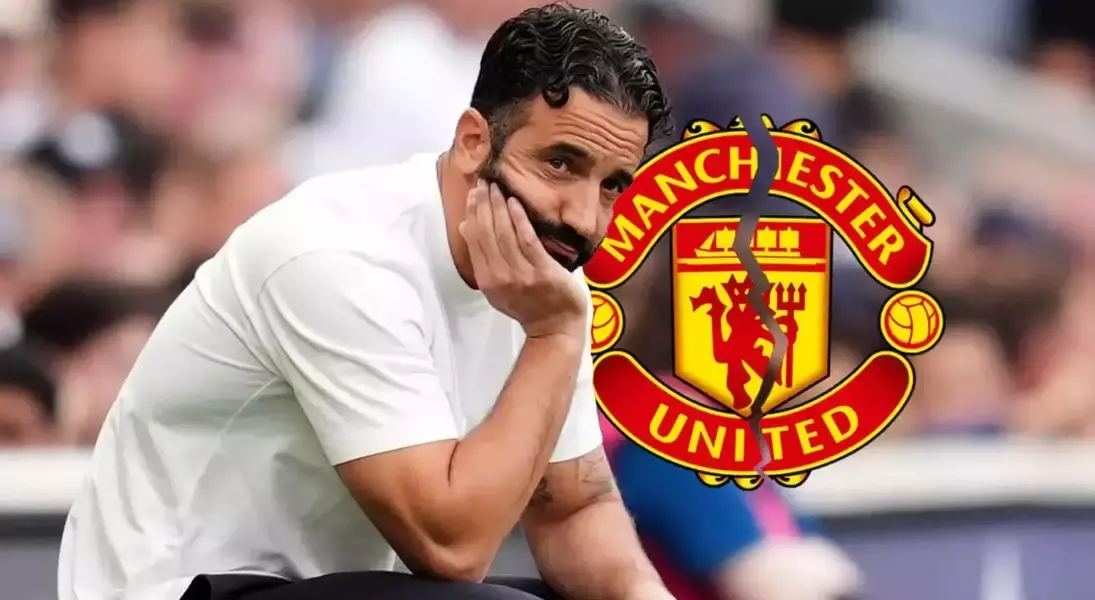
Former Manchester United defender Paul Parker has raised serious concerns regarding the future of manager Ruben Amorim, suggesting his tenure at the club could be nearing an end. Since succeeding Erik ten Hag last November, Amorim has struggled to uplift the team's fortunes, leading to an inconsistent start to the current season. A particularly low point was the embarrassing Carabao Cup defeat to fourth-tier side Grimsby, which has further intensified scrutiny on his leadership. With pivotal matches against Manchester City and Chelsea on the horizon, the pressure on Amorim is immense, as many believe his credibility is rapidly diminishing.
Parker's analysis, shared exclusively with Football365, underscores the inherent volatility of managing a club like Manchester United. He remarked that any manager at the helm of such a prominent institution is perpetually just a few games away from dismissal, especially when faced with a string of losses as Amorim has experienced. The upcoming derby against Manchester City at the Etihad Stadium and the subsequent clash with Chelsea at Old Trafford are perceived as defining moments for Amorim. While the manner of a potential defeat to City might offer some mitigating circumstances, a loss against Chelsea thereafter would severely jeopardize his position, pushing the club towards another managerial change.
However, Parker also cautions against the chaotic consequences of yet another managerial turnover. Such a decision would inevitably lead to a drastic shift in playing style and strategy, potentially bringing back players who were previously deemed inadequate. This constant state of upheaval, he argues, would not only reflect poorly on the current ownership but also echo the problematic decision-making processes that have plagued the club since Sir Alex Ferguson's departure in 2013. The underlying systemic issues at United, Parker asserts, would persist even if the team were to miraculously secure victories in the upcoming high-stakes matches.
Reflecting on the season's early performances, Parker points out that while the initial match against Arsenal offered a glimmer of hope, it might have merely masked deeper problems. He observed that United tends to perform better against teams that adopt a slower ball movement, allowing them to exert dominance. However, their vulnerability becomes apparent when facing teams that move the ball quickly and attack incisively, a weakness starkly exposed in the unexpected loss to Grimsby. That particular defeat, according to Parker, served as a crucial test of his players' resolve, one that they seemingly failed. Despite their historical tendency to rise to the occasion in big matches, the current unpredictability of the United squad leaves their performance in the looming Manchester derby uncertain, highlighting the ongoing challenges that extend far beyond individual match results.



















